

10 Tips for Foreigners to Secure Teaching Jobs in Singapore
Reviewed in October 2026 against official sources (such as MOM, SNB, ECDA, ISCA and MOE, where relevant). Salary figures are indicative market ranges and vary by employer and experience.
10 Tips for Foreigners to Secure Teaching Jobs in Singapore
- Wecruit
- Feb 13, 2025
- 1.00p.m.
10 Tips for Foreigners to Secure Teaching Jobs in Singapore
Singapore, a bustling hub known for its cultural harmony and high quality of life, presents a wide range of teaching jobs for ESL instructors and certified teachers.
The city’s safe environment, vibrant blend of cultures, and emphasis on educational excellence make it a prime destination for teachers seeking meaningful career growth in a supportive and diverse setting.
To help you navigate the job market and increase your chances of securing a position, here are 10 essential tips for landing a teaching job in Singapore.
- Tip 1: Understand the Teaching Landscape in Singapore
- Tip 2: Meet Qualification and Certification Requirements
- Tip 3: Craft a Standout Resume and Cover Letter
- Tip 4: Leverage Recruitment Agencies
- Tip 5: Network Effectively
- Tip 6: Prepare for Interviews
- Tip 7: Understand Work Visa Requirements
- Tip 8: Explore Direct Company Applications
- Tip 9: Stay Open to Part-Time and Freelance Opportunities
- Tip 10: Maximise the Support of Recruitment Agencies
- Singapore’s Hiring Process and Academic Calendar
- Common Teaching Salary and Benefits in Singapore
- Maximise Your Chances for Teaching Jobs in Singapore
- FAQs
Tip 1: Understand the Teaching Landscape in Singapore
Before applying for teaching positions, familiarise yourself with the Singapore education system. The system focuses on strong academic performance, overall student development, and bilingual education, making it highly regarded globally.
Key sectors include:
- Public Schools: Governed by the Ministry of Education (MOE), offering stable and structured teaching roles.
- Private and International Schools: These schools cater to expatriates and locals seeking alternative curricula such as IB, IGCSE, or Montessori.
- Tuition Centres and Enrichment Programs: Popular in Singapore, these institutions provide additional learning support outside regular school hours.
Understanding Singapore’s education sectors gives you a clearer idea of where your teaching experience and interests align.
Tip 2: Meet Qualification and Certification Requirements
To increase your chances of securing teacher jobs in Singapore, ensure your qualifications meet local standards.
For MOE schools, teachers need a professional teaching qualification such as the Postgraduate Diploma in Education (PGDE) or Diploma in Education from the National Institute of Education (NIE). MOE also recruits candidates without teaching qualifications and sponsors their training at NIE; the PGDE requires at least a bachelor’s degree. International schools often require similar credentials, including certifications like TEFL, TESOL, or a Postgraduate Certificate in Education (PGCE).
- Pro Tip:
- Many private schools and English language schools look for a recognised TEFL, TESOL or CELTA certificate, so check each school’s requirements before applying.
Qualifications for an Early Childhood Teaching Job
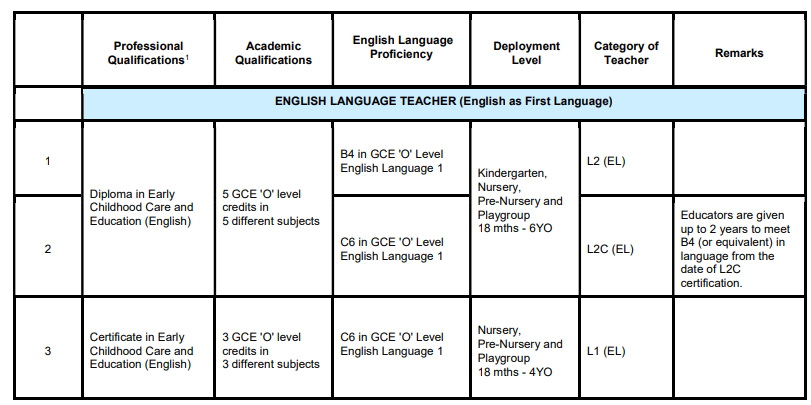
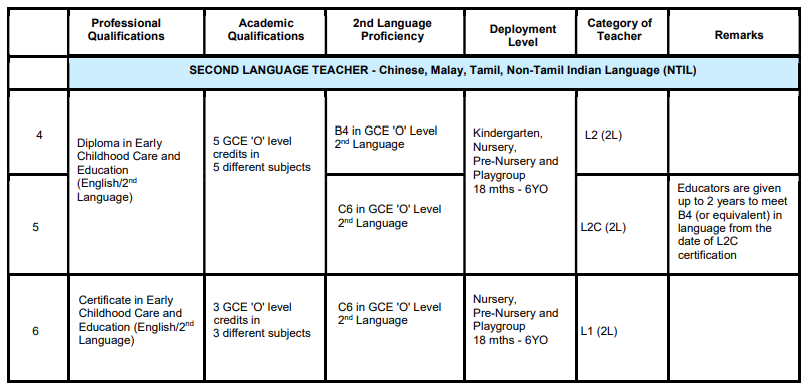
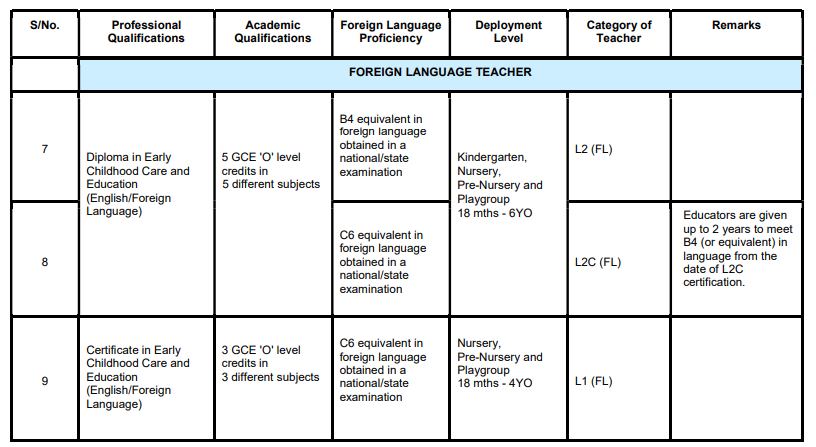
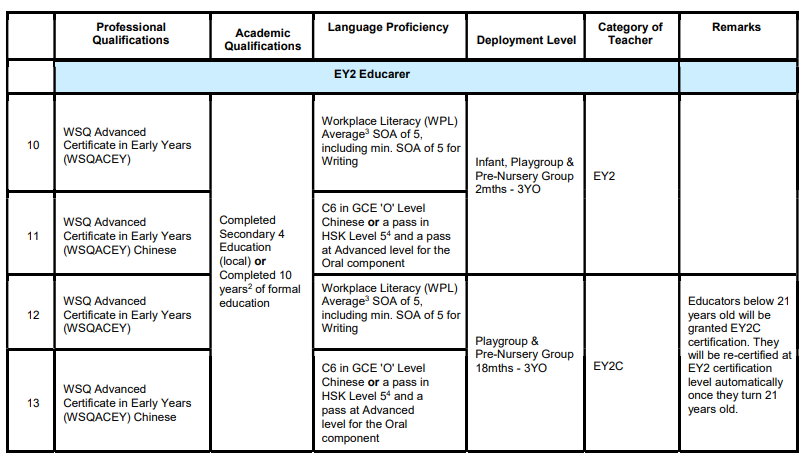
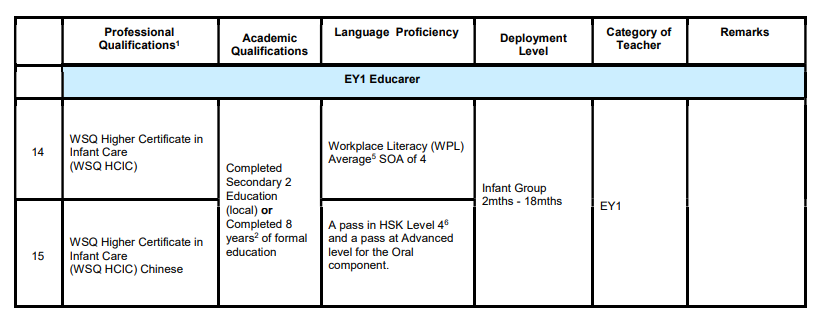
If you’re looking to join the preschool teaching industry in Singapore, here is a clear overview of the key qualifications required.
To teach in a Singapore preschool, educators must be certified by the Early Childhood Development Agency (ECDA). Certification depends on professional, academic and language qualifications: for example, L2-certified teachers can teach children from 18 months to 6 years old, L1-certified teachers from 18 months to 4 years old, and EY1/EY2-certified educarers work with infants and toddlers. Always check ECDA for the latest requirements.
Early Childhood Teacher
Early Childhood Educarer
Tip 3: Craft a Standout Resume and Cover Letter
A strong resume and tailored cover letter are critical in the competitive market for teaching jobs in Singapore. Highlight your teaching experience, educational achievements, and relevant skills. Include specific examples of your classroom success and mention how your teaching philosophy aligns with Singapore’s education values.
- Pro Tip:
- If you’re applying through a recruitment firm in Singapore, ensure your documents adhere to their submission guidelines.
Tip 4: Leverage Recruitment Agencies
Top recruitment agencies in Singapore for foreigners and locals play a pivotal role in connecting candidates with the right opportunities. These agencies have established relationships with schools and educational institutions, offering a direct pathway to job openings.
Popular agencies include:
- Teach Anywhere: Specializing in international school placements.
- Randstad Singapore: Covers various education jobs Singapore-wide.
- Michael Page: A well-known head hunter Singapore firms rely on for education roles.
- Wecruit: A trusted recruitment partner based in Singapore, Wecruit specialises in placing educators in roles that align with their expertise and aspirations.
Tip 5: Network Effectively
Networking is a powerful tool in securing Singapore teaching jobs. Attend job fairs, education conferences, and professional workshops to connect with potential employers. Joining online forums and LinkedIn groups focused on education jobs in Singapore can also expand your network.
Remember, personal referrals from someone within the industry can significantly enhance your chances of being noticed by recruiters.
- Research has shown that employee referrals can boost the likelihood of a candidate being hired by 2.6 to 6.6%. Furthermore, referred candidates have a 40% chance of being interviewed, compared to just 10% for those who are not referred.
Tip 6: Prepare for Interviews
Once you’ve secured an interview, preparation is key. Research the school’s mission, curriculum, and teaching methods. Practice answering common questions like:
- Why do you want to teach in Singapore?
- How do you handle classroom challenges?
- What innovative teaching methods have you implemented? Impress potential employers by showcasing your adaptability and enthusiasm for contributing to Singapore’s education system.
Tip 7: Understand Work Visa Requirements
If you’re a foreigner, securing the appropriate work visa is essential. Most teacher jobs in Singapore require an Employment Pass or S Pass. Employers typically assist with the application process for your Employment Pass or Work Permit on your behalf if you have been offered a job, but you should be aware of the required documents and timelines.
You must have a job offer in hand before you can be considered for a visa that allows you to teach in Singapore.
Key considerations:
- A Letter of Consent may be needed if your spouse holds a Dependant’s Pass.
- Ensure your Employment Pass renewal is submitted on time to avoid disruptions.
Tip 8: Explore Direct Company Applications
While recruitment agencies can simplify the process, some schools prefer direct hiring. Keep an eye on the Singapore job vacancy direct company postings on school websites and job boards. For Malaysians, specific opportunities might be tagged under “Singapore job for Malaysian” categories.
Websites to check:
- MOE Careers: Public school openings.
- International School Websites: Direct hiring pages.
- Job Portals: Platforms like MyCareersFuture, JobsDB and Indeed list numerous SG job vacancy posts.
Tip 9: Stay Open to Part-Time and Freelance Opportunities
If a full-time teaching position isn’t immediately available, consider part-time or freelance roles to gain experience. Freelance positions in education can be stepping stones to permanent school jobs Singapore institutions offer.
Example roles:
- Private tutoring.
- Teaching enrichment programs.
- Working as a freelance accountant Singapore schools hire for education budgeting.
Tip 10: Maximise the Support of Recruitment Agencies
Working with recruitment agencies can streamline your job search in Singapore. These agencies offer personalized career advice, interview preparation, and guidance on work visas and contracts.
For both job seekers and employers, Wecruit stands out as a trusted partner in the education sector, specialising in connecting educators with opportunities that align with their expertise and aspirations.
Here’s how to maximize the support of recruitment agencies like Wecruit:
- Communicate Your Preferences Clearly: Share your teaching experience, desired roles, and preferred school environments (e.g., public schools, international schools, or enrichment centers).
- Tap Into Their Expertise: Agencies like Wecruit offer insights into market trends, salary benchmarks, and schools actively hiring. Use their knowledge to target roles that suit your qualifications.
- Stay Engaged: Keep in touch regularly to remain informed about new opportunities and demonstrate your commitment to finding the right role.
Choosing an agency such as Wecruit not only simplifies the process for job seekers but also ensures employers are matched with skilled and passionate educators.
Singapore’s Hiring Process and Academic Calendar
For those looking to teach in Singapore, understanding the hiring process and the academic calendar is essential.
Key Hiring Periods
- Before the New Academic Year (August to October): Most schools begin their hiring process several months ahead of the academic year, which runs from January to November. Applying during this time increases your chances of securing a position for the start of the school year.
- Mid-Year Hiring (March to May): Some schools hire for the second semester, which begins in July, often to fill vacancies or meet rising demand.
Year-Round Opportunities
International schools, private institutions, and enrichment centers may recruit year-round based on their specific needs.
Academic Calendar Structure
The school year is split into two semesters: January to June and July to November, with breaks in between. School holidays are typically in June, September, and December, providing opportunities for travel, relaxation, or professional development.
By timing your application strategically and preparing early, you’ll improve your chances of landing a teaching role in Singapore.
Common Teaching Salary and Benefits in Singapore
Salaries for teachers in Singapore vary depending on the level of education and experience, but they are generally competitive.
For local public schools, teachers can expect a starting salary of around SGD 3,000-4,000 per month, with opportunities for salary progression based on experience and additional qualifications. Private and international schools may offer slightly higher salaries, depending on the institution.
Benefits typically include healthcare, paid holidays, and a pension scheme. Teachers may also receive bonuses at the end of the year, and some schools offer relocation assistance and housing allowances for expatriates.
While salary packages often cover relocation and airfare, housing is usually not included. Most city residents live in compact high-rise apartments that are functional, modern, and air-conditioned.
Maximise Your Chances for Teaching Jobs in Singapore
Securing teaching jobs in Singapore requires strategic planning, professional networking, and persistence. By leveraging resources like recruitment firms in Singapore and tailoring your approach to the local market, you can enhance your chances of landing a fulfilling role.
Whether you’re a seasoned educator or just starting, following these tips will position you for success in Singapore’s competitive education sector. Good luck in your journey to becoming an integral part of Singapore’s world-class education system!
FAQs
Before searching job portals or school websites, ensure you have the required qualifications: for MOE schools, a professional teaching qualification such as NIE’s PGDE or Diploma in Education (MOE also recruits and trains candidates without one); for international and private schools, qualifications such as a PGCE, TEFL, TESOL or CELTA, depending on the school.
Singapore offers various teaching jobs, including positions in public schools, private institutions, international schools, and tuition centres. Roles are available across all education levels, from preschool to primary and secondary schools.
Yes, especially in early childhood education. Roles like L2 and L1 English Language Teachers or Second Language Teachers (e.g., Chinese, Malay, Tamil) are available, provided you have a Diploma or Certificate in Early Childhood Care and Education and specific language proficiency requirements. Foreign language teachers are also in demand, particularly for kindergarten and nursery levels.
Yes, foreigners can apply for preschool teaching jobs in Singapore, particularly in early childhood education roles such as English or Second Language Teachers. To qualify, you’ll need a Diploma or Certificate in Early Childhood Care and Education, and meet language proficiency requirements, typically based on GCE ‘O’ Level standards. These positions often involve teaching children from 18 months to 6 years old in nursery and kindergarten settings.
Yes. To teach in MOE primary schools, you typically need a professional teaching qualification such as NIE’s Postgraduate Diploma in Education, or you can apply to MOE to be recruited and trained at NIE. Check MOE’s careers website for the latest eligibility requirements. International and private schools hire separately and set their own requirements, often a teaching degree or PGCE plus classroom experience.
English teaching jobs in Singapore are available in public schools, international schools, and private language centres. Websites like Wecruit, JobStreet, and individual school websites list available positions regularly.
Yes, there are Tamil teaching jobs in Singapore, especially in early childhood education and primary schools. Positions are available for both native Tamil speakers and those with strong proficiency in the language. Requirements typically include a diploma in Early Childhood Care and Education or similar qualifications, along with a good command of Tamil. Schools may hire Tamil teachers for teaching Tamil as a second language or for bilingual programs.
Yes, foreigners can apply for English teaching jobs in Singapore, particularly in international schools, private language schools, or enrichment centres. A TEFL or TESOL certification is often required for foreign applicants.
Salaries for teaching jobs in Singapore vary depending on the institution and the teacher’s qualifications and experience. For public schools, starting salaries range from SGD 3,000 to SGD 4,000 per month, while international schools may offer higher salaries.
Yes, many teaching jobs in Singapore offer visa sponsorship, particularly for foreign teachers hired by international schools or private institutions. These employers typically sponsor Employment Passes for qualified candidates.
Yes, part-time teaching jobs are available in Singapore, especially in language schools, tuition centres, and enrichment programs. These positions offer flexibility and are ideal for those looking to supplement their income or work on a part-time basis.
Hiring in Singapore? Preschools and centres can hire ECDA-certified educators through our preschool & early childhood recruitment team.
Looking for your next role? Submit your resume to be considered for teaching and early childhood roles.