
Want To Know More About Our Company?
Curious What Else We Do?
Wecruit Pte Ltd (“Wecruit”) was incorporated with the idea that employment is an intimate process of human interaction.
Reviewed in November 2026 against MOE, ECDA and MOM sources. Salary information is a guide only and varies by school and experience.
Singapore, a bustling hub known for its cultural harmony and high quality of life, presents a wide range of teaching jobs for ESL instructors and certified teachers.
The city’s safe environment, vibrant blend of cultures, and emphasis on educational excellence make it a prime destination for teachers seeking meaningful career growth in a supportive and diverse setting.
To help you navigate the job market and increase your chances of securing a position, here are 10 essential tips for landing a teaching job in Singapore.
Before applying for teaching positions, familiarise yourself with the Singapore education system. The system focuses on strong academic performance, overall student development, and bilingual education, making it highly regarded globally.
Key sectors include:
Understanding Singapore’s education sectors gives you a clearer idea of where your teaching experience and interests align.
To increase your chances of securing teacher jobs in Singapore, ensure your qualifications meet local standards.
For MOE schools, teachers need a professional teaching qualification such as the Postgraduate Diploma in Education (PGDE) or Diploma in Education from the National Institute of Education (NIE). MOE also recruits candidates without teaching qualifications and sponsors their training at NIE; the PGDE requires at least a bachelor’s degree. International schools often require similar credentials, including certifications like TEFL, TESOL, or a Postgraduate Certificate in Education (PGCE).
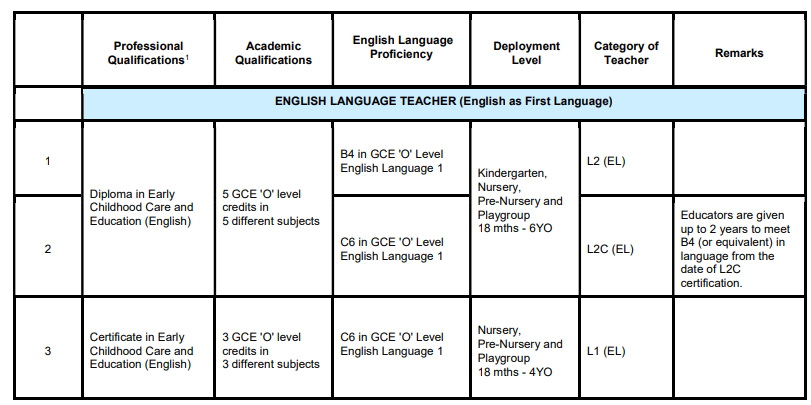
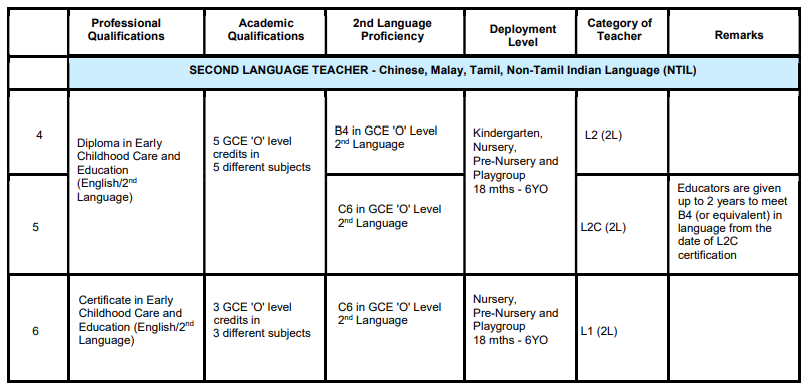
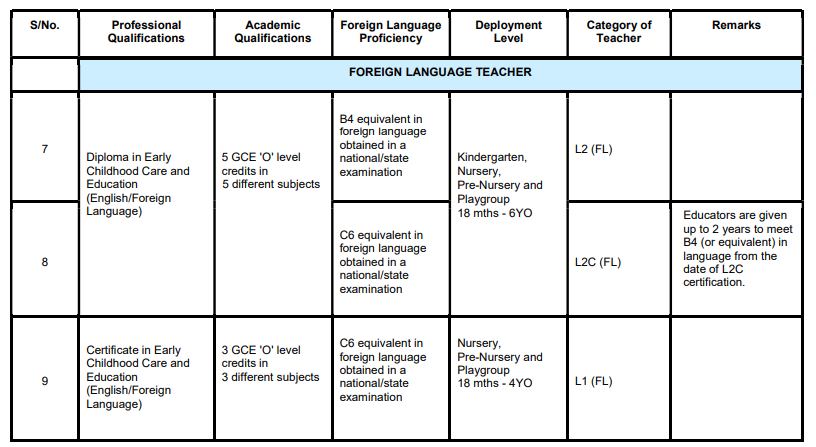
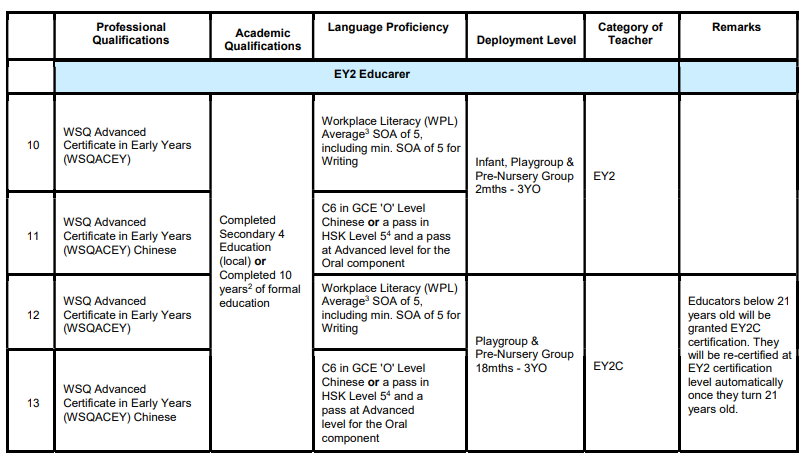
If you’re looking to join the preschool teaching industry in Singapore, here is a clear overview of the key qualifications required.
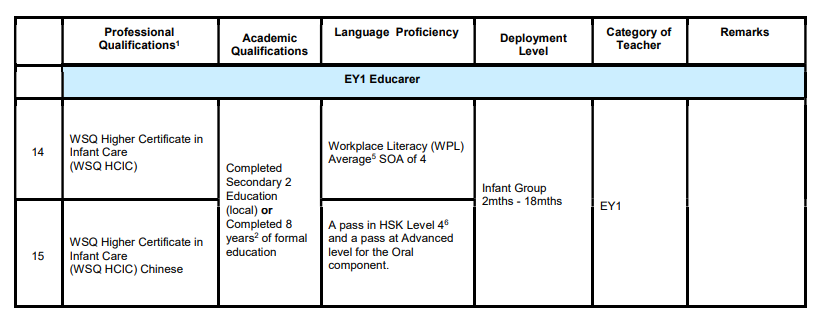
To teach in a Singapore preschool, educators must be certified by the Early Childhood Development Agency (ECDA). Certification depends on professional, academic and language qualifications: for example, L2-certified teachers can teach children from 18 months to 6 years old, L1-certified teachers from 18 months to 4 years old, and EY1/EY2-certified educarers work with infants and toddlers. Always check ECDA for the latest requirements.
A strong resume and tailored cover letter are critical in the competitive market for teaching jobs in Singapore. Highlight your teaching experience, educational achievements, and relevant skills. Include specific examples of your classroom success and mention how your teaching philosophy aligns with Singapore’s education values.
Top recruitment agencies in Singapore for foreigners and locals play a pivotal role in connecting candidates with the right opportunities. These agencies have established relationships with schools and educational institutions, offering a direct pathway to job openings.
A good education recruiter can help you with:
Networking is a powerful tool in securing Singapore teaching jobs. Attend job fairs, education conferences, and professional workshops to connect with potential employers. Joining online forums and LinkedIn groups focused on education jobs in Singapore can also expand your network.
Remember, personal referrals from someone within the industry can significantly enhance your chances of being noticed by recruiters.
Once you’ve secured an interview, preparation is key. Research the school’s mission, curriculum, and teaching methods. Practice answering common questions like:
If you’re a foreigner, securing the appropriate work visa is essential. Most teacher jobs in Singapore require an Employment Pass or S Pass. Your employer applies for your Employment Pass or S Pass on your behalf if you have been offered a job, but you should be aware of the required documents and timelines.
You must have a job offer in hand before you can be considered for a visa that allows you to teach in Singapore.
Key considerations:
While recruitment agencies can simplify the process, some schools prefer direct hiring. Keep an eye on vacancies posted on school websites and job boards.
Websites to check:
If a full-time teaching position isn’t immediately available, consider part-time or freelance roles to gain experience. Freelance positions in education can be stepping stones to permanent school jobs Singapore institutions offer.
Example roles:
Working with recruitment agencies can streamline your job search in Singapore. These agencies offer personalized career advice, interview preparation, and guidance on work visas and contracts.
For both job seekers and employers, Wecruit stands out as a trusted partner in the education sector, specialising in connecting educators with opportunities that align with their expertise and aspirations.
Here’s how to maximize the support of recruitment agencies like Wecruit:
Choosing an agency such as Wecruit not only simplifies the process for job seekers but also ensures employers are matched with skilled and passionate educators.
For those looking to teach in Singapore, understanding the hiring process and the academic calendar is essential.
International schools, private institutions, and enrichment centers may recruit year-round based on their specific needs.
The school year is split into two semesters: January to June and July to November, with breaks in between. In MOE schools, the main holidays fall in March, June, September and from mid-November to December, providing opportunities for travel, relaxation, or professional development.
By timing your application strategically and preparing early, you’ll improve your chances of landing a teaching role in Singapore.
Salaries for teachers in Singapore vary depending on the level of education and experience, but they are generally competitive.
For MOE schools, starting pay depends on your qualifications and experience, and MOE publishes current figures on its teaching careers website. Salaries progress with experience and additional qualifications. Private and international schools may offer slightly higher salaries, depending on the institution.
Benefits typically include healthcare, paid holidays, and, for Singapore citizens and PRs, CPF contributions. Teachers may also receive bonuses at the end of the year, and some schools offer relocation assistance and housing allowances for expatriates.
Packages for overseas hires sometimes cover relocation and airfare, but housing is often not included, so check the offer carefully. Most city residents live in compact high-rise apartments that are functional, modern, and air-conditioned.
Securing teaching jobs in Singapore requires strategic planning, professional networking, and persistence. By leveraging resources like recruitment firms in Singapore and tailoring your approach to the local market, you can enhance your chances of landing a fulfilling role.
Whether you’re a seasoned educator or just starting, following these tips will position you for success in Singapore’s competitive education sector. Good luck in your journey to becoming an integral part of Singapore’s world-class education system!
Before searching job portals or school websites, ensure you have the required qualifications: for MOE schools, a professional teaching qualification such as NIE’s PGDE or Diploma in Education (MOE also recruits and trains candidates without one); for international and private schools, qualifications such as a PGCE, TEFL, TESOL or CELTA, depending on the school.
Singapore offers various teaching jobs, including positions in public schools, private institutions, international schools, and tuition centres. Roles are available across all education levels, from preschool to primary and secondary schools.
Yes, especially in early childhood education. Roles like L2 and L1 English Language Teachers or Second Language Teachers (e.g., Chinese, Malay, Tamil) are available, provided you have a Diploma or Certificate in Early Childhood Care and Education and specific language proficiency requirements. Foreign language teachers are also in demand, particularly for kindergarten and nursery levels.
Yes, foreigners can apply for preschool teaching jobs in Singapore, particularly in early childhood education roles such as English or Second Language Teachers. To qualify, you’ll need a Diploma or Certificate in Early Childhood Care and Education, and meet language proficiency requirements, typically based on GCE ‘O’ Level standards. These positions often involve teaching children from 18 months to 6 years old in nursery and kindergarten settings.
MOE sets its own eligibility rules for teachers, including citizenship and residency requirements, so check MOE’s teaching careers website before applying. Foreign teachers more often join international and private schools, which hire directly and set their own requirements, usually a teaching degree or PGCE plus classroom experience.
English teaching jobs in Singapore are available in public schools, international schools, and private language centres. Wecruit, MyCareersFuture, JobStreet and individual school websites list openings regularly.
Yes, there are Tamil teaching jobs in Singapore, especially in early childhood education and primary schools. Positions are available for both native Tamil speakers and those with strong proficiency in the language. Requirements typically include a diploma in Early Childhood Care and Education or similar qualifications, along with a good command of Tamil. Schools may hire Tamil teachers for teaching Tamil as a second language or for bilingual programs.
Yes, foreigners can apply for English teaching jobs in Singapore, particularly in international schools, private language schools, or enrichment centres. A TEFL or TESOL certification is often required for foreign applicants.
Salaries for teaching jobs in Singapore vary depending on the institution and the teacher’s qualifications and experience. For MOE schools, starting pay depends on qualifications and experience, and MOE publishes current figures on its careers website, while international schools may offer higher salaries.
Yes, many teaching jobs in Singapore offer visa sponsorship, particularly for foreign teachers hired by international schools or private institutions. These employers typically sponsor Employment Passes for qualified candidates.
Yes, part-time teaching jobs are available in Singapore, especially in language schools, tuition centres, and enrichment programs. These positions offer flexibility and are ideal for those looking to supplement their income or work on a part-time basis.
Hiring in Singapore? Preschools and centres can hire ECDA-certified educators through our preschool & early childhood recruitment team.
Looking for your next role? Submit your resume to be considered for teaching and early childhood roles.
Wecruit Pte Ltd (“Wecruit”) was incorporated with the idea that employment is an intimate process of human interaction.

Contact Us
© 2026 Wecruit Pte Ltd. All Rights Reserved. | EA Licence No. 20C0270 | UEN 202024371N